California litigators know that discovery wins and loses cases long before trial. Among discovery tools, the civil subpoena remains one of the most powerful because it reaches beyond the pleadings and beyond party-controlled evidence. Whether you need payroll records from a former employer, metadata from a non-party software vendor, or live testimony from a reluctant witness, subpoena practice is where procedural precision and litigation strategy converge.
This guide is written for practicing attorneys and litigation teams who need a practical, up-to-date framework for subpoena work in California state and federal matters. It addresses the complete subpoena lifecycle: choosing the correct subpoena type, meeting issuance and service requirements, handling privacy-protected records, preparing defensible objections, and prosecuting or opposing a motion to quash. It also explains when nationwide domestication and cross-jurisdiction logistics are better managed by a professional vendor.
Because subpoena disputes often arise under intense case pressure, the most effective lawyers approach subpoena preparation as both legal drafting and project management. That means assigning clear ownership for notice packets, service execution, witness-fee tender, objection tracking, and escalation decisions before deadlines compress. A disciplined workflow does more than avoid technical errors—it improves negotiation leverage, reduces emergency motion practice, and protects the record if judicial enforcement becomes unavoidable.
If your matter includes interstate discovery, start by reviewing Countrywide Process resources such as the Nationwide UIDDA Subpoena Domestication Guide and Simplifying Subpoena Domestication, then build your California-specific plan around the Code of Civil Procedure and court-local practice.
![Civil Subpoena: Complete Guide for California Attorneys [2026]](https://countrywideprocess.com/blog/wp-content/uploads/2026/05/c363e4ab-80b1-4422-8821-077624d86078-1024x572.webp)
Countrywide Process
May 04, 2026
A civil subpoena is a court-backed command that requires a person or entity to do one or more of the following: appear to testify, produce documents or electronically stored information (ESI), or permit inspection of tangible items. In California civil practice, subpoenas are directed most often to non-parties, though party witnesses and organizational representatives may also be compelled within applicable limits.
Practically, a subpoena closes evidence gaps that written party discovery cannot always reach. It allows counsel to authenticate records, establish chains of decision-making, uncover third-party communications, and lock in testimony from witnesses outside party control. For many commercial, employment, healthcare, and financial disputes, subpoena evidence is the difference between an inferential argument and a provable fact pattern.
From a risk-management perspective, subpoena practice must be treated as a deadline-driven procedural discipline. Defects in notice, timing, form language, or service can invalidate your subpoena and create avoidable delay. That is why many firms standardize subpoena checklists and use specialized support for filing and service execution when matters involve multiple counties or out-of-state components.
A subpoena ad testificandum compels oral testimony. Attorneys use it for depositions, evidentiary hearings, and trial appearances when witness testimony cannot be secured voluntarily. The strategic value is straightforward: it places a legal obligation behind attendance and creates enforceable consequences for noncompliance.
When drafting testimony subpoenas, be specific about date, time, location, and the proceeding context. Ambiguity invites objections and scheduling disputes. In deposition practice, coordinate with court reporter availability and local logistics before service to reduce continuance risk.
A subpoena duces tecum commands production of documents, ESI, and tangible things. In modern litigation, this often includes cloud-based records, audit trails, text communications, and business-system exports. Because data custodians vary in sophistication, requests should define date ranges, custodians, and file formats with enough clarity to support compliance and enforcement.
California attorneys handling document-heavy disputes often pair narrowly tailored definitions with staged production timelines. This improves compliance and minimizes overbreadth objections. For record categories commonly implicated in interstate matters, Countrywide’s guide on Issuing Out-of-State Subpoenas in California can help teams coordinate domestication and California-compliant service.
California Judicial Council forms permit combined commands in appropriate settings, allowing counsel to compel personal appearance and production in one instrument when permitted by rule and context. Combined subpoenas are efficient but should be drafted carefully so the production scope remains defensible and proportional.
Use subpoenas when critical evidence resides with non-parties or when voluntary cooperation is uncertain. Common examples include employer personnel files, insurer claim logs, medical billing records, platform account data, and third-party contract archives. Subpoenas are also appropriate to secure testimony from former employees, independent contractors, and custodians whose knowledge is central to liability or damages.
In many cases, the question is not whether to subpoena, but when. Early subpoenas can shape pleading amendments, mediation posture, and expert retention strategy. Late subpoenas may still be effective for impeachment or trial preparation but carry compressed response windows and greater motion practice risk. Counsel should calendar issuance backward from motion deadlines, expert disclosure dates, and trial readiness conferences.
If your discovery plan spans jurisdictions, compare process pathways with practical references such as How to Domesticate an Out-of-State Subpoena in Ohio, How to Domesticate an Out-of-State Subpoena in Minnesota, and How to Domesticate an Out-of-State Subpoena in Missouri. Doing so helps litigation teams identify where lead-time assumptions differ from California.
In federal litigation, subpoena practice is governed by Federal Rule of Civil Procedure 45. A subpoena must identify the issuing court, case caption, civil action number, and the exact command. It must also include the required text of Rule 45(d) and (e), because those provisions define protection duties, objection rights, and contempt exposure.
Counsel should confirm attorney-admission and signing authority before issuance. While federal subpoena power is nationwide, procedural validity still depends on correct form, proper notice, and enforceable compliance location. Internal review before service is materially cheaper than post-service motion repair.
Before serving a document subpoena on a non-party, provide prior notice and a copy to all parties. This is not a formality; failure to provide notice can undermine enforceability and invite sanctions arguments. For testimony and production, apply the Rule 45 place-of-compliance limits, including the 100-mile framework and party-officer exceptions where applicable.
When attorneys conflate federal and UIDDA procedures, they lose time. Countrywide’s article, Out-of-State Federal Subpoenas: When Domestication Is (and Is Not) Required, is a practical reminder that federal subpoenas and state domestication rules operate under different authority structures.
Federal recipients may object in writing, move to quash or modify, or seek protective relief based on privilege, burden, or procedural defects. Issuing counsel should anticipate these challenges by documenting relevance, narrowing scope, and preserving proportionality rationale in correspondence.
A strong federal subpoena workflow includes a pre-service burden check, post-service meet-and-confer script, and a motion package template ready for rapid filing. This level of preparation often resolves disputes without court intervention and improves credibility when judicial relief is required.
In California Superior Court matters, subpoenas are governed by the Code of Civil Procedure, including Title 4 and related discovery provisions. Attorneys of record may issue subpoenas, and clerks may issue signed blanks depending on form and local process. Use one subpoena per witness or custodian unless a specific procedural reason supports an alternative approach.
For subpoena duces tecum requests, precision in definitions and attachment language reduces motion risk. Include clear instructions for production method and timing, and ensure consistency between the caption, command language, and any rider schedules.
California imposes strict privacy-notice requirements when subpoenaing consumer or employee records from third-party custodians. Before serving the records custodian, serve the consumer or employee with the required notice package and allow the statutory objection window to run. This sequence is mandatory and frequently litigated.
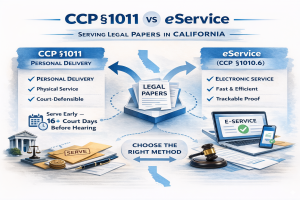
Counsel should track mailing dates, personal service dates, and production deadlines in one integrated timeline. If you serve the custodian too early or omit proof of consumer notice, the subpoena is vulnerable. Teams managing high volume California matters often rely on service references such as How to Serve California Court Papers and CCP §1011: Personal Service of Subsequent Documents in CA to align process staff and litigators.
State subpoena timing should always be calculated from the compliance date backward, then validated against statutory minimums and mailing rules. When witness appearance is compelled, include applicable witness fees and mileage requirements. Defects in tender can create avoidable enforcement disputes.
As a practical matter, attorneys should treat California subpoena deadlines as operational milestones rather than static legal dates: draft complete, notice complete, service complete, proof complete, and follow-up complete. This operational framing reduces missed steps across large dockets.
Step 1: Identify the evidence objective and legal theory. Define exactly what testimony or records are necessary and why they matter to a claim, defense, damages model, or impeachment plan.
Step 2: Select the correct forum rule set. Confirm whether the matter is governed by FRCP 45 or California CCP provisions, then select the proper form and command language.
Step 3: Draft with precision. Use narrow definitions, specific date ranges, and practical production instructions, including ESI format expectations where relevant.
Step 4: Complete all required notices. In California consumer or employee record matters, serve notice first and preserve proof.
Step 5: Arrange legally compliant service. Use qualified non-party servers and confirm service on the correct person or agent.
Step 6: Calendar objections and meet-and-confer windows immediately after service. Early negotiation resolves many disputes without motion practice.
Step 7: Enforce strategically. If compliance fails, proceed with a motion to compel or motion practice tailored to the procedural posture and evidentiary urgency.
Service is where otherwise strong subpoenas often fail. In California, personal service remains the standard for many subpoena commands, and service on an entity must be made on an appropriate officer, custodian, or authorized agent. Counsel should verify service targets against public filings and registered-agent records before dispatch.
Proof of service must be complete, accurate, and stored in the litigation record as soon as service is executed. If enforcement becomes necessary, your proof packet will be central to the court’s analysis. For entity-service logistics and registered-agent scenarios, Countrywide’s practical post on Serving Legal Documents to LegalZoom as Registered Agent in California is useful for process planning.
For firms handling statewide volume, vetted vendor selection matters. Countrywide’s Tips to Find the Best Process Server in California provides a concise framework for evaluating speed, documentation quality, local reach, and compliance discipline.
When representing a subpoena recipient, begin with triage: verify jurisdiction, service validity, scope, timeline, privilege exposure, and burden profile. Then issue a litigation hold if relevant records are implicated. Delay at intake is the most common source of preventable waiver and contempt risk.
Serve written objections within the applicable deadline when requests are overbroad, privileged, unclear, or unduly burdensome. A timely objection can shift the burden back to issuing counsel to seek court intervention. At the same time, engage in targeted meet-and-confer communications to preserve reasonableness and reduce fee-shifting risk.
For producing parties, adopt a defensible collection and redaction workflow. Document custodians, search parameters, privilege screens, and production logs. Courts are increasingly attentive to process integrity, especially where ESI spoliation or selective production is alleged.
A motion to quash is the primary vehicle for challenging a subpoena that is procedurally defective, seeks privileged matter, imposes undue burden, or invades protected privacy interests. California courts evaluate both legal validity and practical proportionality; counsel should therefore present declarations that quantify burden and explain why narrower alternatives are unavailable or already proposed.
Effective quash practice depends on timing. File early enough to preserve meaningful relief before production or testimony occurs. Include meet-and-confer evidence, proposed narrowing options, and a clear privilege or privacy framework. Judges respond favorably when counsel demonstrates a practical path to legitimate discovery rather than a blanket refusal.
Issuing counsel opposing a quash motion should be ready with relevance mapping, narrowed categories, and protective-order language. If the court is likely to modify rather than quash entirely, practical alternatives can preserve key evidence while reducing the chance of adverse fee outcomes.
As dockets become more cross-jurisdictional and data-intensive, subpoena execution is increasingly operational. Law firms that treat subpoena work as a specialized service function—rather than an ad hoc administrative task—typically achieve better compliance rates, faster turnaround, and fewer motions based on technical defects.
Professional subpoena support can centralize issuance logistics, county filing requirements, service attempts, affidavits, and status tracking. This is especially valuable when a California case requires non-party discovery in multiple states or when trial calendars leave little room for procedural error. For a broader multi-jurisdiction perspective, see Countrywide’s state-focused resources, including Efficient Out-of-State Subpoena Services in Washington, D.C..
Counsel selecting a vendor should evaluate legal-process experience, quality control on proofs, escalation speed, and transparency in reporting. In high-stakes matters, the strongest provider is not merely a courier; it is a procedural partner aligned with litigation deadlines and evidentiary goals.
Countrywide Process supports attorneys and legal departments with subpoena domestication, filing coordination, and compliant service execution in California and across the United States. Whether your matter requires same-week service in multiple counties or coordinated out-of-state discovery under UIDDA, our team helps you reduce delay, avoid procedural defects, and keep discovery on schedule.
If your firm is preparing a high-volume subpoena campaign or needs support on a time-sensitive case, contact Countrywide Process to build a jurisdiction-specific service plan with transparent status updates and defensible proof documentation from start to finish.
A subpoena ad testificandum compels a person to appear and testify. A subpoena duces tecum compels a person or entity to produce documents, books, records, electronically stored information (ESI) , or tangible evidence. In California practice, certain forms can combine both commands when appropriate.
No. Domestication rules apply to state-court discovery crossing state lines, typically under UIDDA frameworks. Federal subpoenas in federal cases follow FRCP 45 and do not use the same state domestication path.
Generally no. California law requires advance notice to the consumer or employee before serving the records custodian for protected records. Failing to follow notice timing can invalidate enforcement efforts.
You should allow at least the statutory minimums, normally at least 15 to 30 days before the subpoena compliance date, depending on the type of subpoena, and then add practical lead time for service, objections, and meet-and-confer activity, typically noted as reasonable amount of time, but traditionally 10 days before the production date. Build deadlines backward from hearings, expert disclosures, and trial milestones.
Common grounds include procedural defects, insufficient time to comply, overbreadth, undue burden, privilege, and privacy protections. Courts may quash, modify, or condition compliance depending on the facts.
Professional providers improve speed and compliance by coordinating filing logistics, proper service, proof quality, and multi-jurisdiction execution. This reduces avoidable discovery delays and motion practice tied to technical defects.