Preparing for a remote deposition requires more than sending a video link. Attorneys need a defensible workflow for notice, platform logistics, exhibit control, oath administration, record integrity, and transcript/video use at trial—especially where California and federal rules impose specific requirements.
Countrywide Process
April 13, 2026
Remote depositions are now a standard litigation tool, not a stopgap. But the attorneys who get the best record from a remote deposition are usually the ones who prepare for technology, exhibits, witness environment, and officer administration with the same care they give outline drafting and impeachment planning. A well-structured remote proceeding requires detailed checklists and preparation steps to ensure technical readiness and a smooth, secure process. Federal Rule 30(b)(4) expressly permits depositions by remote means by stipulation or court order, and California permits depositions by telephone or other remote electronic means under its discovery rules.
For attorney teams, the real issue is not whether a remote deposition is allowed. The real issue is whether the process is set up to produce a clean, usable record on the subject of the deposition that can survive motion practice, trial preparation, and evidentiary scrutiny. In California, rules governing remote appearance, electronic recordings, and the use of deposition recordings at trial all make early planning essential.
In federal practice, Rule 30(b)(4) allows a deposition to be taken by telephone or other remote means by stipulation or court order. The rule also provides that, for certain procedural purposes, the deposition is deemed to take place where the deponent answers the questions. That matters for disputes over officer location, subpoena enforcement, and record administration.
In California, Code of Civil Procedure section 2025.310 provides that a person may take, and any person other than the deponent may attend, a deposition by telephone or other remote electronic means. California’s rules are broad enough to support modern remote deposition practice, but they do not eliminate the need to think carefully about who is with the witness, where the officer is positioned, and how the record is preserved. In some cases, the other party may not provide necessary personnel or resources at the last minute, and remote solutions can help ensure the deposition proceeds as scheduled without delay.
California also has special rules when a deposition is recorded by audio or video technology. Section 2025.340 sets out requirements for the recording environment, the recording operator, and the circumstances in which an operator must be authorized to administer an oath and be disinterested. If the video may later be used under the trial-use provisions, those technical and neutrality requirements matter from day one.
A related practical point is trial usability. California Rule of Court 2.1040 addresses electronic recordings offered or presented in evidence and generally requires transcript support unless the court orders otherwise. For attorneys, that means a remote deposition is not just a discovery event. It is potentially a future evidentiary asset, and it should be built that way.
Costs and fee planning: what attorneys should budget for
Remote depositions can reduce travel expenses, but they are not cost-free. Attorneys should still expect charges tied to the deposition officer, court reporter, videographer or video platform support, exhibit management, transcript delivery, rough drafts, real-time feeds, interpreter coordination if needed, and certified video synchronization in matters where trial use is likely. The ABA has noted that the remote deposition market includes both traditional reporter-led services and newer AI-assisted transcription offerings, but the appropriate workflow depends on the jurisdiction, the intended use of the record, and the level of reliability counsel needs.
In California matters, counsel should be especially careful about assuming that an AI-generated transcript alone is enough. Where an audio or video recording of deposition testimony is offered into evidence, California law requires a stenographic transcript prepared by a certified shorthand reporter unless a stenographic record was previously prepared. That makes certified reporting support a strategic, not cosmetic, line item.
First, confirm the authority for the remote format. In many cases that will be handled by stipulation. In others, motion practice may be appropriate. Either way, memorialize the format, the platform, the officer arrangement, and any special witness accommodations before the deposition date.
Remote depositions create risks that do not exist in a standard conference-room setting. Counsel should decide in advance how to address off-camera persons, device use, texting, private chats, document prompts, and whether the witness must identify everyone in the room at the start of the examination. A stipulated protocol helps prevent mid-deposition disputes and reduces gamesmanship.
The deposition officer is not a last-minute vendor. The officer should be looped in while the notice and logistics are still being shaped. In California video matters, the operator and officer roles can carry qualification requirements, especially if the recording may later be used in evidence. Early coordination also helps avoid problems with oath administration, identity verification, and exhibit sequencing.
Exhibit failure is one of the fastest ways to lose momentum in a remote examination. Attorneys should decide whether exhibits will be pre-marked, shared through a managed platform, or introduced live. It is crucial to systematically manage and organize introduced exhibits, ensuring they are properly authenticated and easily accessible throughout the deposition process. The goal is not simply convenience. The goal is a clean record showing what the witness reviewed, when they reviewed it, and whether anyone else had access during testimony.
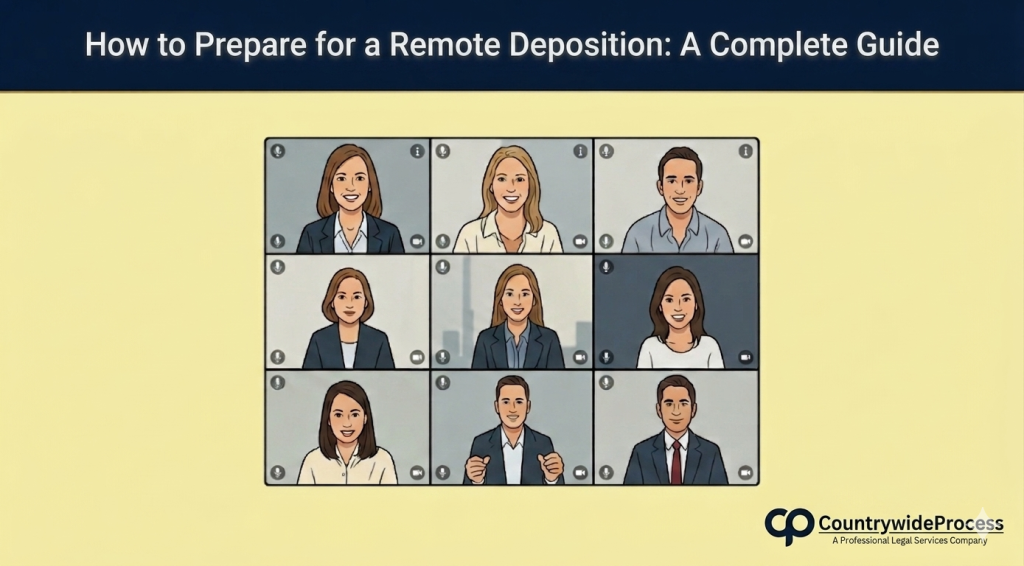
A reliable remote deposition requires testing camera placement, microphone clarity, bandwidth stability, screen sharing, private attorney communication channels, and backup connection options. As part of the technology check, test the gallery view feature to ensure all participants can be seen and heard clearly, and practice toggling between gallery view and speaker view to customize the display as needed. Good litigators do not improvise these items at start time. They rehearse them. The same is true for interpreters, realtime feeds, and any technician support.
If there is even a reasonable chance the testimony will be used in support of a motion or shown at trial, prepare the deposition with that end use in mind. In California, electronic recordings presented in evidence generally require transcript support, and section 2025.340 imposes conditions on the recording setup itself. A remote deposition that is casually assembled may still produce testimony, but it may not produce a record you can confidently use later.
Effective electronic communication and collaboration are at the heart of successful remote depositions. Modern remote deposition solutions are designed to bring multiple participants together in the same virtual room, no matter where they are located. Features such as digital exhibits, breakout rooms, and screen sharing empower attorneys to present exhibits and conduct depositions with the same level of control and clarity as in-person proceedings. Breakout rooms allow for private attorney-client discussions, while screen sharing ensures that all parties can review documents and evidence in real time. Robust security protocols protect sensitive information, giving participants confidence that their data and communications remain confidential. The ability to attend proceedings from any location not only increases convenience but also maximizes efficiency, making remote depositions an essential tool in today’s litigation landscape. With these advanced features, attorneys can conduct virtual hearings, manage exhibits, and collaborate seamlessly, ensuring that every participant remains engaged and the deposition process stays on track.
Leveraging live tools like the realtime feed and transcript can transform the way attorneys conduct remote depositions. A realtime feed provides a live, scrolling transcript of the testimony as it happens, allowing participants to follow along, identify key moments, and flag important sections for later review. This immediate access to the transcript enables attorneys to focus on the most critical aspects of the deposition, ask follow-up questions on the spot, and ensure that nothing is missed. Many remote deposition solutions integrate these features into a secure platform, often compatible with tools like Microsoft Teams, to provide a seamless and efficient experience. Electronic means such as live annotation and note-taking further enhance the ability to conduct depositions efficiently, reducing the need for post-deposition transcript review and streamlining the preparation of motions or trial presentations. By utilizing these advanced features, attorneys can maximize efficiency, maintain control over the deposition process, and ensure that every key moment is captured and easily accessible.
Attorneys and legal teams have quickly identified favorite features and tools that make remote depositions more effective and user-friendly. The ability to present exhibits electronically stands out, allowing for instant sharing and review of documents without the logistical challenges of physical copies. Breakout rooms provide a private space for confidential discussions between attorneys and clients, while screen sharing facilitates real-time collaboration and clarification of complex evidence. Witness annotation tools enable participants to highlight and comment on key moments directly within the digital exhibits, making it easier to identify and revisit important testimony. The realtime feed and transcript features are also highly valued, offering immediate access to the deposition record and supporting efficient note-taking. With customizable preferences, attorneys can tailor the remote deposition experience to suit their workflow, whether they are relying on a secure platform, a stable internet connection, or other electronic means. These features collectively enhance the ability to conduct efficient, private, and secure depositions, making remote proceedings a preferred choice in modern litigation.
Reliable technical support and troubleshooting are essential for ensuring that remote depositions proceed without disruption. Leading remote deposition solutions offer multiple channels for technical assistance, including phone, email, and other electronic means, so that any issues can be addressed promptly. Robust security measures—such as encryption and secure servers—are built into these platforms to safeguard sensitive data and maintain the integrity of the proceeding. Many providers also offer comprehensive training resources and user guides to help participants navigate the platform and resolve common technical challenges. This proactive approach to support ensures a seamless experience for all parties, allowing attorneys to focus on the deposition itself rather than worrying about technical glitches. With a dependable support system in place, participants can be confident that any technical difficulties will be swiftly managed, keeping the deposition secure, efficient, and on schedule
Many attorneys focus on getting the witness online and forget to build a defensible record around who controlled the environment. That is often the hidden pressure point in a remote deposition. A strong protocol should address not only platform logistics, but also witness isolation, unauthorized communications, document access outside the exhibit process, and clear on-the-record identification of all persons present. This is where an experienced deposition officer and coordinated litigation-support team can quietly prevent avoidable fights.
Countrywide Process can be positioned here as the operational buffer for attorney teams handling remote depositions. The legal strategy remains with counsel. The execution layer—coordinating deposition officer services, remote logistics, exhibit handling workflow, and a cleaner record for later use—is where operational support matters most.
For law firms, that means fewer preventable problems on the day of testimony and a better-organized path from notice to transcript to video handling. It also supports the larger goal of modern litigation practice: a deposition process that is efficient for the client, manageable for the attorney, and strong enough to hold up when the testimony matters most.
If your firm is preparing for a remote deposition and wants a cleaner operational workflow, Countrywide Process can help coordinate Deposition Officer services and litigation-support logistics that keep the proceeding organized, defensible, and attorney-focused. For counsel managing remote testimony across busy dockets, the difference is rarely the platform alone. It is the preparation behind it.
Yes. Federal Rule of Civil Procedure 30(b)(4) allows depositions to be taken by telephone or other remote means by stipulation or court order.
Yes. California Code of Civil Procedure section 2025.310 permits a deposition to be taken by telephone or other remote electronic means.
In many matters, yes. The deposition officer remains important for oath administration, record handling, and overall procedural integrity, especially when video is involved.
Potentially, yes, but attorneys should prepare the deposition with evidentiary rules in mind. In California, electronic recordings presented in evidence generally require transcript support under rule 2.1040, and section 2025.340 imposes recording requirements.
Not if the recording will be offered into evidence and a stenographic transcript is required. California law requires a stenographic transcript prepared by a certified shorthand reporter unless a stenographic record was already prepared.
The biggest risk is losing control of the record through weak exhibit handling, unclear witness environment rules, preventable technology failures, or a video setup that does not support later use
Attorneys should confirm the legal basis for the remote format, the platform, witness identification, officer arrangement, exhibit protocol, backup technology plan, and any restrictions on off-record communications or off-camera assistance.
At the conclusion of a remote deposition, the proceeding is complete. The deposition officer or court reporter will distribute the official transcript and any exhibits to the parties involved